Donnerstag 24 September 2026
The second coming of Morten Harket
BY JAN OMDAHL
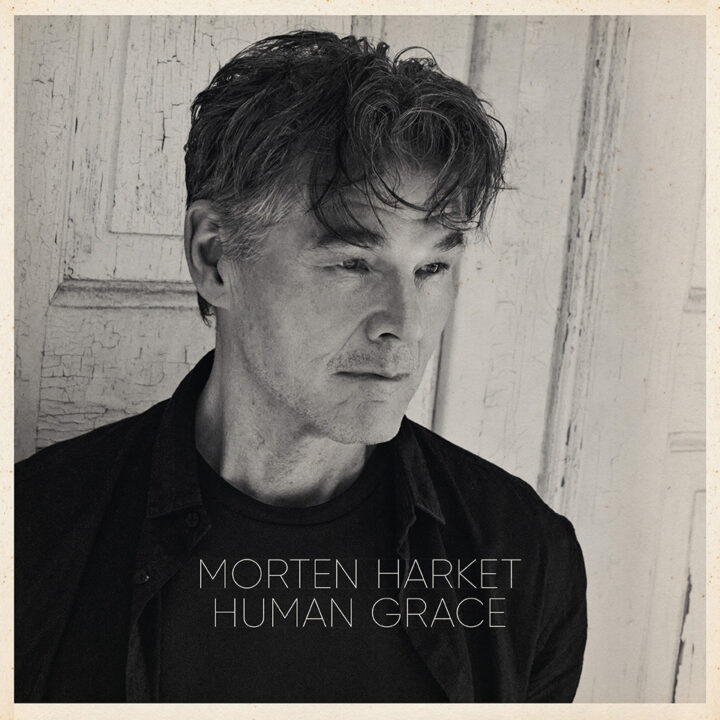
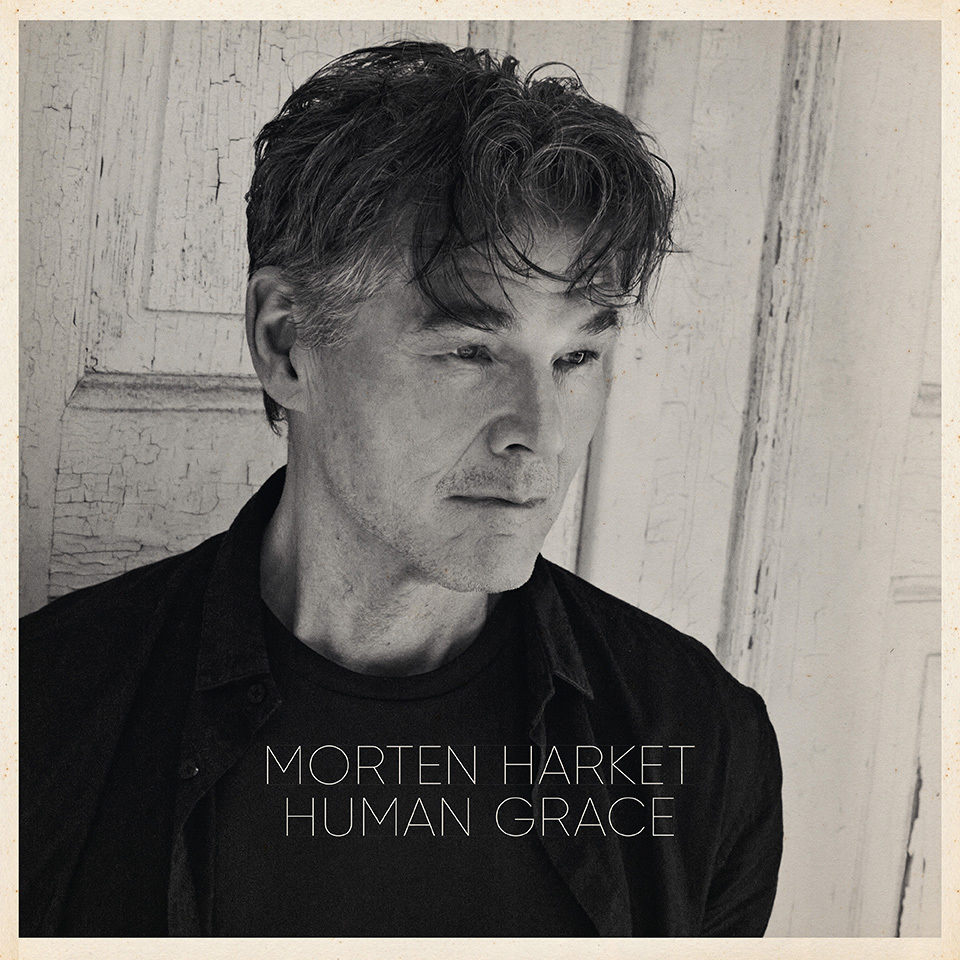
It is surely the most surprising comeback of the year, and the most poignant: Almost 41 years after «Take On Me» changed his life, a year and a half after he announced he has Parkinson’s disease, a neurodegenerative condition for which there is no cure, a-ha front man Morten Harket bounces back with his seventh solo album. Human Grace is the result of considerable determination in the face of debilitating disease. That same determination keeps him looking forward, even keeping the door ajar for a possible future with a-ha. Read on!
The new album is out November 27th, released by Warner Records on vinyl, cd and streaming platforms. The first single, «Hold Me», an uplifting, melancholic pop song featuring his daughter Tomine, is out September 25th. Click to Order.
– I had been writing and recording songs over the years since Brother, in between working with a-ha. My co-producer Peter Kvint and I started looking at the material with new eyes, finding ourselves pleasantly surprised by the quality and coherence of what was waiting to be freed up. It was uplifting. It’s been quite a journey, to be able to land this. For me, and certainly for everyone else working with me under such uncertainty, giving it all they had.
I’m proud of them, all – grateful to them all! I’m curious whether the songs will reach people these days…
Back in 2025, Harket told me he liked the spontaneous thought of «just going for it, as a Parkinson’s patient and an artist, with something completely outside the box». I ask him if this is that album:
– Certainly not. I wasn’t interested in flaunting the symptoms, to try and make sense of them in a recording. I have Parkinson’s, and I’ve done the album with its limitations, whatever they are. But flaunting the Parkinson’s aspect would be a gimmick, and that I’m just not interested in.
Apart from the main body of vocals, everything on the album is all new. Instrumentation and arrangements, even some vocal overdubs, were done between July 2025 and July 2026. A group of ace Swedish and Norwegian session musicians contributed, including the Stockholm Studio Orchestra, as well as a-ha live keyboard stalwart Erik Ljunggren, the latter overseeing post production. It turned out to be a very enjoyable album to do, says Harket:
– It has been really good for me to focus on and apply myself to in this "tunnel" that I’m in. A wonderful experience, with the companionship and the attitude of everyone around me. I believe this may be the most cohesive album I’ve made. It’s one thing. Production-wise, I think it’s solid, and Jonas Kroon has done a brilliant job mixing the album.
In late May last year, at his summer house on the southern coast of Norway, I spent a weekend with Harket as we prepared to let the world know about his condition. He showed me some lyrics and played some demos and song sketches. They seemed promising, but unfinished. Would they ever leave his iPad?
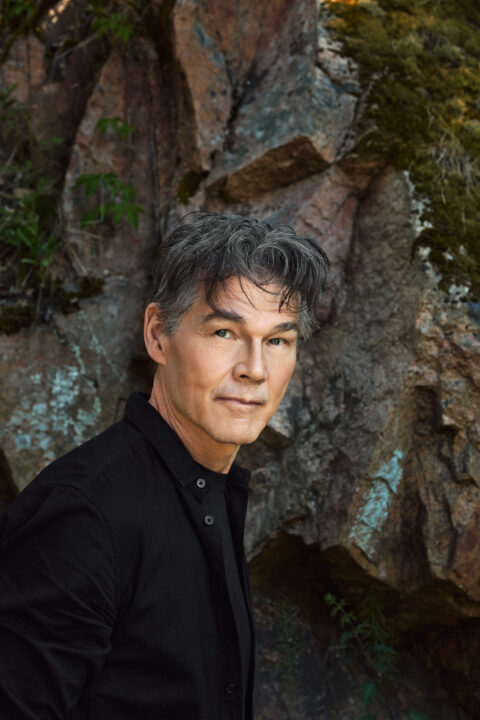
Fast forward 16 months, to the small cottage he uses as a home studio and getaway near his house on a big piece of land by the Oslo fjord, an hour’s drive outside the city. We’re surrounded by lush vegetation, with water on three sides. The cozy old timber cottage is meticulously renovated, full of signs of Harket's handiwork as a self-taught carpenter. His partner, Inez Andersson, hovers discreetly in the background.
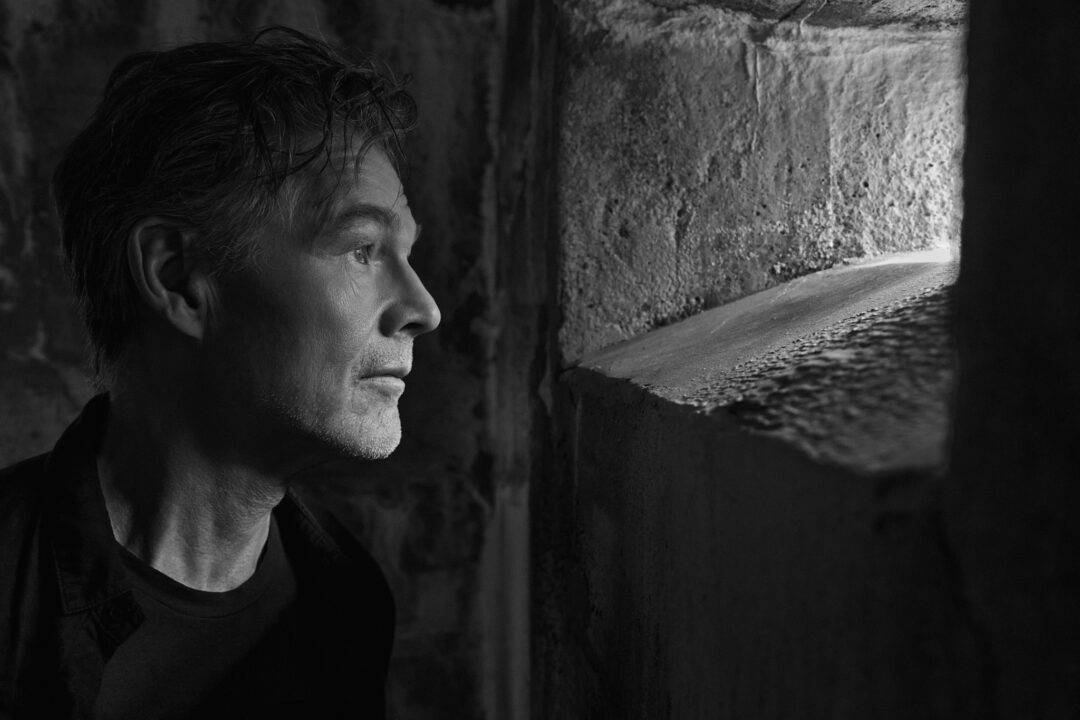
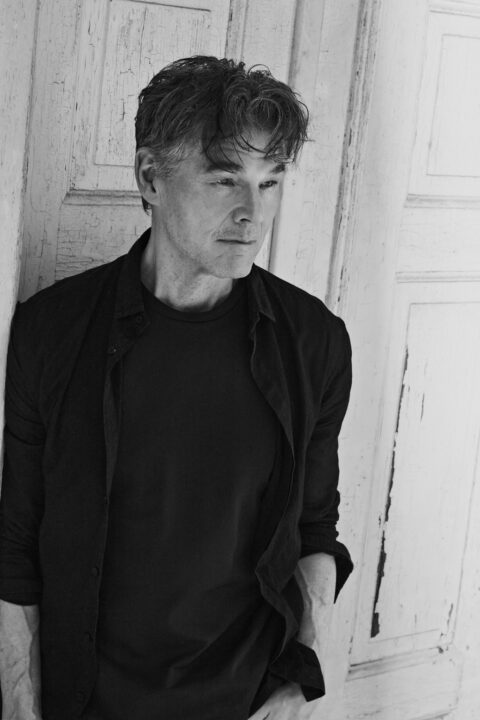
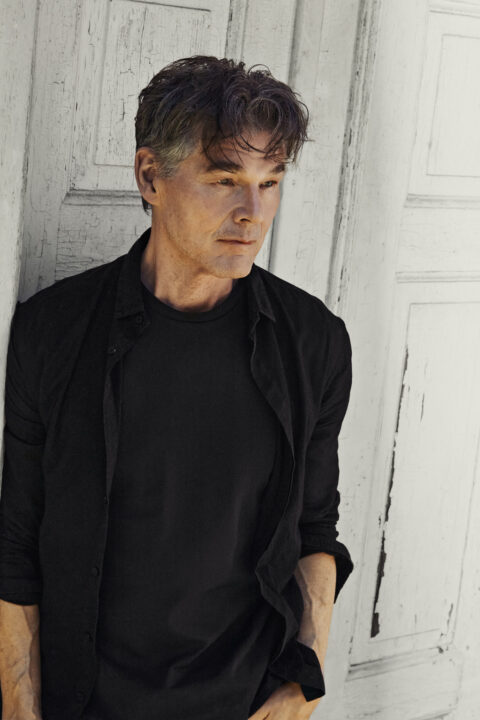
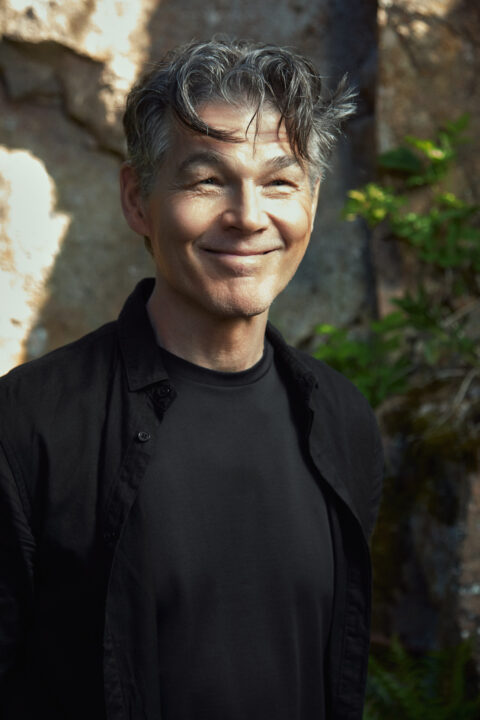
It immediately becomes clear that the man before me is not Morten Harket – confidently swaggering global pop star and sex symbol. He has never been quite at ease playing those roles, but now he just can’t. This is Morten Harket – a man in his mid to late sixties, struggling with a very serious neurological disease. A father of five, a grandfather, a legacy artist with 50 years in the business. Older and wiser, but also more frail and ruminative. The voice is soft, a bit hoarse, sometimes slurred. He searches for words, often closing his eyes hard. The body language is stiffer and slower than it used to be.
– Shut up!, he exclaims at one point. Fortunately, it turns out he is addressing his own leg, which is shaking a bit. – It is a mistake putting one leg over the other, because then the tremors start. But Parkinson’s didn’t break my spirit. Instead, it showed me how impossibly fabulous the human system is, how incredible our design is. When you start to lose it, bit by bit, you start realising how fantastic it is. It has been … interesting.
He is tense, frustrated at his limitations. But also, somehow, relieved, perhaps even triumphant, at finishing the new album. «Human Grace» is a profoundly personal solo project, dealing with subject matter close to the singer’s heart:
– To me, this album is a celebration of life. I have always loved true beauty, and I keep finding that there is nothing more beautiful in life than love. So why are we humans making life into a darker place? We are becoming limp bystanders these days to forces in us that want to let our primal drives decide who we are.
The title track, also the album opener, is a mid-tempo, catchy rocker, with an almost Tom Petty-esque feel. The lyrics are a prime example of Harket’s heart and mind at work: a strong belief in the power of love, connection and the natural world, paired with an almost misanthropic look at the human condition. He lays it out, vintage Harket sermon style:
– «Human Grace» was written during the lead up to the Russian invasion of Ukraine. That’s when it was written, but generally speaking, the lyric is a response to the false representation of mankind we are facing daily, as presented to us through media, and in particular through SoMe. I wrote «Human Grace» because I love the natural world; stunningly beautiful and deeply impressive, because I love the constant potential of it all, including us people. I wrote it because life is still a mystery, and more so today than it has ever been. The apparent wisdom behind the architecture of the natural world and the rest of the universe vastly outshines us, humans. I wrote the song because we humans, in our rich variety, are also beautiful, if we choose to be, though a more humble attitude would serve us well.
He immediately adds:
– In fact, the entire album is circling around these matters.
«Human Grace» is also framed by family. Two of his daughters make special guest appearances. The first single, «Hold Me», featuring Tomine Harket (33), is an emotionally charged ballad, highlighting the vocal interplay between father and daughter. «Falling Down», is a more sombre, bittersweet affair, featuring Karmen Poppi A. Harket (18). Harket found working with his daughters fulfilling:
– My relationship with them has had very little to do with my professional life. That is just something they’ve had to deal with. Encountering them like this, representing themselves in a recording situation, was interesting. I was very impressed.
That he had two songs he was unable to complete, turned out to be a blessing in disguise:
- I wanted those songs on the album, but knew I wouldn't be able to complete the vocals. Then it struck me; «why don't I ask my daughters?». After I did, I started wondering why I hadn't done it before. There is the fact that Karmen has been too young, of course, but she isn’t anymore. She got to use her voice in a different way than she normally does, which I think was fun for her. Tomine is also a very different type of artist than I am, and established in her own right. I’m glad I asked them, and I really like what they have done.
Although Harket isn’t too keen on analyzing or explaining his lyrics, he offers some clues to the meaning of the album’s second track «Hold Me», his duet with Tomine:
– It’s a situation seen by two people with different vantage points. It’s a song about how coming together changes your perspective on things. It’s about what lies waiting if you welcome other human beings. If you read people’s actions through the eyes of love, it’s a very powerful filter.
«Hold Me» grows into a big, swooping arrangement, featuring the Stockholm Studio Orchestra and some Harket high notes. The song was written with Peter Kvint and Tomine Harket. Lyrics are by Harket and this old writing partner, the poet and lyricist Ole Sverre Olsen, who has co-written lyrics for six of the album’s ten songs.
Peter Kvint worked on the album both in his studio in Stockholm and in Oslo, developing instrumentation and arrangements, as well as adding various instrumental parts. That the multi-instrumentalist is also co-songwriter on eight of the album’s ten tracks, says something about his key role:
– I trust him to do what he feels like. I couldn’t travel during the recording, but was very impressed by what he achieved in Stockholm. He has done a fantastic job. My task in many cases was to pick what to use and what to lose.
«Falling Down» features his youngest daughter, Karmen. Like Tomine does on «Hold Me», she brings a contrast of youthful purity to the song. Starting as a melancholic mid tempo ballad with just acoustic guitar and airy synth, it soon grows into a full band arrangement. Lyrically, it seems to deal with the challenges of human connection, through two people assessing their relationship. He initially hesitates at my description of the song as melancholic:
– Yeah, is melancholic the right word, though? I just never picked that up from it - that sounds resigned to me. The spirit of the song is more vigil. It could be a father and a daughter. One is the older, which is the part I have in the song. It raises concerns between two people who love and care for each other, asking where things are going. Karmen’s voice is more cutting and to the point. The issues surface there: We’re fast losing our ability to communicate, we are losing our language. And then we lose trust if it no longer aligns with whom we say we are. Trust is a finely woven and supple fabric, very strong when intact, but if one thread comes loose, it can all come apart fast.
«Falling Down» is one of several songs on the album seemingly addressing, directly or indirectly, how glowing screens and social media corrupt our lives. To quote a line from «Human Grace»: We feast on trash / And trash we’ll become.
A related theme seems to be the concept of stillness and quiet, or the lack thereof. Coming from someone who has spent more than 40 years in the limelight, it certainly seems personal, but Harket says his lyrics shouldn’t be read as autobiographical:
– They aren’t necessarily drawn from my own experiences, they deal with the human condition and have relevance to us all.
«Lord, I Can’t Help You Now», a darker, swaggering rocker with echoes of Memorial Beach-era a-ha, triggers a discussion of his relationship to rock music. He couldn't get enough, he says. After Uriah Heep and Deep Purple made him realize as a young boy that there was more to life than butterflies and orchids, it was the blues-tinged rock of Hendrix that really made things click:
– After hearing Hendrix, I didn't listen to music for three months. Hearing «Hey Joe» made such a strong impact that I just had to silence things for a while.
Lyrically, «Lord, I Can’t Help You Now» describes a situation where everything has gone to hell, he explains, only half jokingly:
– God has given us free will, it says. It means the footprints you leave are yours. You are accountable for the things you choose to do as you are accountable for the things you don’t do. Which means you’re on our own in this world we’re all born into. But we can reach out to each other spiritually and emotionally. God is not actually going to hold your hand, because the responsibility is yours. In my heart, I’m as taken by the teachings of Christ as I’ve always been. Unfortunately, they can be made a mockery of. That’s how it goes when you live by answers, and not by questions. That’s how you end up in fundamentalism: you stop asking questions, stop reaching out in wonder.
On a lighter note, fans of his voice will appreciate the ballad «Shot of Fear». On this, the album’s standout vocal performance, Harket is showing off his range to full effect. When he hits those high notes, it's off to Goosebump City. The song wasn’t written as an exercise in vocal gymnastics, though:
– No. I think that is part of why it works: It doesn’t sound contrived.
Lyrically, «Shot of Fear» reads like another love song with a twist, something the album turns out to be full of. Harket explains, somewhat reluctantly:
– It’s a state of being that, if you’re lucky, you get to experience. It’s a feeling of being elevated in a particular moment.
The last track, «If I Ever See Your Face Again», is a haunting ballad featuring just voice, Kvint’s piano and strings.
– It’s the reflections of a man who has lived a long life, someone who has come to a final understanding of himself and his role over the years, not least towards the one he’s addressing. At the core of it, it’s about thankfulness. There’s also remorse, perhaps over a relationship that has broken down, or is hanging by its fingertips. There’s a measure of grief in it, but also a sense of blessing, of having arrived.
Could that someone, perhaps, be him?
– Yes and no. I knew when I wrote it, which happened really fast, that this would be relevant to a lot of grown men in particular. Men and women relate to many things in life quite differently. And as men we are surprised to discover what it is that actually matters to women.
I ask him if Parkinson’s has lowered his guard, professionally or privately.
– Perhaps. The disease makes you question everything. It makes you humble, sometimes mad. I’ve never felt that it was unfair that I got sick, but it’s a huge, massive test of patience. My patience has been relentlessly tested throughout my career, but this is different. You’re really being tested, in ways other people can’t fathom without being there themselves. It affects so many aspects of normal, everyday life.
He still has hopes of getting his singing voice back, or at least one he can work with:
– The voice I have now is not just caused by Parkinson’s itself, but also by the medicines and their side effects. It’s a very complex balance to find. At its worst, even my speaking voice was gone. It was just flat, unmusical, with no detectable emotions. Dead, almost. I couldn't express what I felt, which was a tough place to be in. But the symptoms comes and goes. Nothing is damaged on the physical side with regards to the voice. Since we spoke last, it has come back to a certain extent. When I speak now, there is melody in my voice, even though it is somewhat suppressed. It’s not back to the point where I can use it actively as a singer. Especially not on tour, where a lot of people depend on you being able to deliver. That I doubt I can do. But being able to record – when the situation is right and my voice allows – is something I can perhaps see happening.
He doesn’t, therefore, necessarily see «Human Grace» as some kind of last hurrah. To the contrary, he is looking for ways to express himself further. And, at the risk of firing up a-ha fans worldwide, he adds:
– I’m constantly looking for a way back to using my voice for recording. I’ve done some new vocals on this record, but nowhere near enough to say I’m there. I’m hoping to get there, and that might even mean going back in the studio with the band, with a-ha.
Wait, what, did he just say that? After all, emotional stress tends to make Parkinsons’s symptoms worse in many patients. But Harket isn’t concerned about a possible reentry into the a-ha sphere, with all its well-publicized friction between band members. On the contrary, he seems to savour the idea:
– If the opportunity was to arise, and the conditions were right, I’d be available with my head and my heart. I’m an artist, and that’s what interests me. I’m very proud of what we have achieved with a-ha. The catalogue is huge, and it’s pretty good stuff, I must say. I have every respect for Magne and Paul. We were very lucky to find each other at the time we did. We’ve done so much together, and only time will tell what can happen. It’s not the friction in the band that worries me, it’s to have to deal with the media and the public attention. It’s a massive force that gravitate towards the primitive stuff. You need mental capacity and a stamina that I no longer have to deal with that.
He should know. It’s like he himself once observed, in a moment of tongue-in-cheek self reflection:
– It’s no coincidence it is me who is Morten Harket.
Jan Omdahl is a journalist and author. In 2003 he published the a-ha biography The Swing of Things (Forlaget Press), which was released in a revised and expanded edition in 2010.
Photos